GoTV Streaming, LLC v. Netflix, Inc., Nos. 2024-1669, 2024-1744 (Fed. Cir. Feb. 9, 2026)
On February 9, 2026, the U.S. Court of Appeals for the Federal Circuit reversed a judgment and jury damages award against Netflix, holding that the asserted claims of three related GoTV Streaming patents (U.S. Patent Nos. 8,478,245, 8,989,715, and 8,103,865) are patent-ineligible under 35 U.S.C. § 101. The court concluded the claims are directed to an abstract idea (using a generic template of specifications and then tailoring those specifications to a user device’s constraints using conventional server/ network operations) and do not recite an inventive concept sufficient to transform that idea into patent-eligible subject matter.
Although the court also reversed the district court’s indefiniteness ruling as to one claim phrase, the § 101 holding was dispositive and the Federal Circuit directed entry of judgment for Netflix, erasing a significant jury verdict in the process.
##The § 101 Holding: Abstract Idea + Conventional Implementation
###The Claimed Concept (as Treated by the Court)
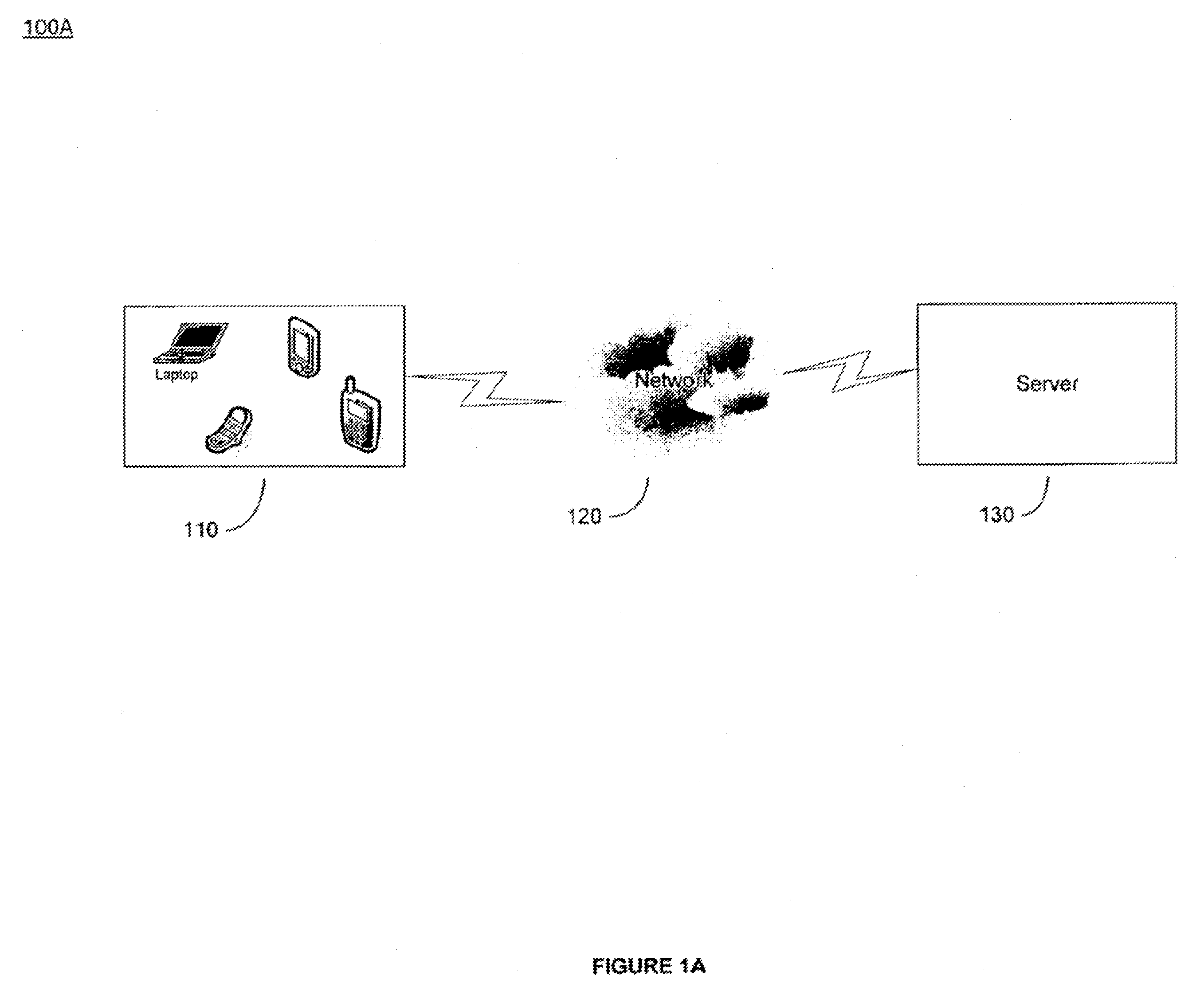
GoTV’s patents are generally directed to delivering application content to wireless devices by having a server:
- receive a device request (including device type);
- generate a wireless-device-generic template (a non-device-specific set of display specifications);
- send a custom configuration (look-and-feel data) to the device; and
- generate and send a page description based on the generic template and the device’s capabilities, containing at least one “discrete low level rendering command” in device-generic syntax but within the device’s rendering capability.
For eligibility purposes, GoTV treated claim 1 of the ’865 patent as representative, and the court focused its analysis accordingly, finding all asserted claims invalid for the same reasons.
##Alice Step One: “Directed to” an Abstract Idea
Reversing the District Court’s conclusion that the claims were eligible at Step One, the Federal Circuit held that the representative claim is directed to the abstract idea of:
- creating a template set of specifications that is generic in at least some respects, and
- tailoring at least one aspect of that template for final production to fit user-specific constraints (here, the requesting device’s capabilities).
The court emphasized that this type of templating-and-tailoring concept is a familiar, longstanding practice and remains abstract even when applied to a particular technological environment (wireless device displays). The claims were not saved by describing the idea in the vocabulary of networks and mobile rendering; narrowing the abstract idea to “display content on a wireless device” did not change the Step One outcome.
Conventionality and technological environment are legitimate Alice Step One inquiries, and the Federal Circuit in GoTV followed a line of other cases that have treated “result-based functional language” as a red flag at Step One. For example, in Two-Way Media, the court explained that the representative claim required the functional results of “converting,” “routing,” “controlling,” “monitoring,” and “accumulating records,” but “does not sufficiently describe how to achieve these results in a non-abstract way,” and that, at best, the claimed constructions relied on generic computer components providing only a generic environment for carrying out the abstract idea.
Likewise, Recentive confirmed that it is proper at Step One to treat claims as abstract where the claimed “advance” is the use of an already available technology with its already available basic functions “as a tool” and where the claims disclose only that the technology is used in a new environment—and it adds that simply performing a task humans previously did “with greater speed and efficiency” (without improved computer techniques) does not change the eligibility outcome (expressly noting this point applies “[w]hether the issue is raised at step one or step two”).
###No Concrete “Computer Improvement”
GoTV argued the claims were directed to a computer/network improvement, but the court rejected that framing because the claims:
- do not recite new or improved hardware (server, device, or network);
- do not improve the wireless device’s rendering process (the device’s rendering capability is assumed and merely accommodated);
- do not improve ordinary computer operations such as receiving, storing, processing, outputting, and transmitting data.
Instead, the claim uses conventional computing and networking as tools to perform the templating-and-tailoring idea.
###“Technical” Labels Didn’t Change the Analysis
The court treated terms GoTV relied on (e.g., “wireless device generic template,” “custom configuration,” “page description,” and “rendering command”) as describing packages of information rather than specific technological structures or mechanisms that improve how computers or networks operate. In the court’s view, these terms did not provide the missing “how” needed to show a concrete improvement to computer functionality, as opposed to functional results.
##Alice Step Two: No Inventive Concept
Having found the claims directed to an abstract idea, the court proceeded to Step Two and held there was no inventive concept that made the claims “significantly more” than the abstract idea.
Key points driving the Step Two conclusion:
- The claims rely on result-focused, functional language (e.g., generate a template, tailor based on device capability, send descriptions/configurations) without specifying how tailoring is performed in a nonconventional way.
- The claims invoke ordinary server/network functions (receiving requests, assembling information, transmitting data) without any claimed improvement in how those functions are carried out.
- Any asserted improvements in speed or efficiency were attributed to using conventional computers and networks, which the court reiterated is not enough to confer eligibility.
- The court discounted reliance on GoTV’s expert declaration because conclusory assertions about inventiveness or performance gains, untethered to concrete claim limitations, do not supply an inventive concept.
##What This Means in Practice
###1) “Adapt content to device capabilities” remains § 101-sensitive
This decision reinforces that claims centered on tailoring content/display specifications to device constraints are vulnerable when they read as merely gathering information, generating a template, tailoring the template, sending it and transmitting it, all implemented using conventional computing and networking.
###2) Eligibility turns on the “how,” not the “what”
If the “advance” is adaptation/customization (templates, tailoring, optimization, personalization, ML-based selection), claims need to include the how, in the form of a concrete mechanism (specific algorithmic steps, data structure constraints, protocol-level changes, or a defined improvement to computer/network operation). Otherwise, a court can characterize the claim as result-oriented and “tool use” at Step One.
Even when claims use jargony language (“templates”, “configurations”, “rendering commands”), the court will look for a specific mechanism or a concrete improvement in computer/network functionality, rather than a desired outcome recited at a high level. For the prosecutors in the crowd, the appropriate claim drafting mantra is “how, not what.”
###3) Step two requires more than efficiency rhetoric
Assertions that the approach is faster, cheaper, or more scalable without claim language that concretely implements a technical improvement are unlikely to establish an inventive concept, especially on a record limited to intrinsic evidence and generalized expert opinions.
###4) Avoid field-of-use crutches:
Limiting claims to a “technological environment” (streaming, wireless rendering, event scheduling, network maps) is often treated as a new environment for an otherwise generic technique and does not, by itself, prevent an abstract-idea finding at Step One.